30-year software engineer. Early AI-native builder.

We're all guinea pigs. Trillions of dollars are subsidizing our growing dependence on tools the field has not yet stress-tested. We must embrace AI-native development — but do so with eyes wide open.

01 The Path Here

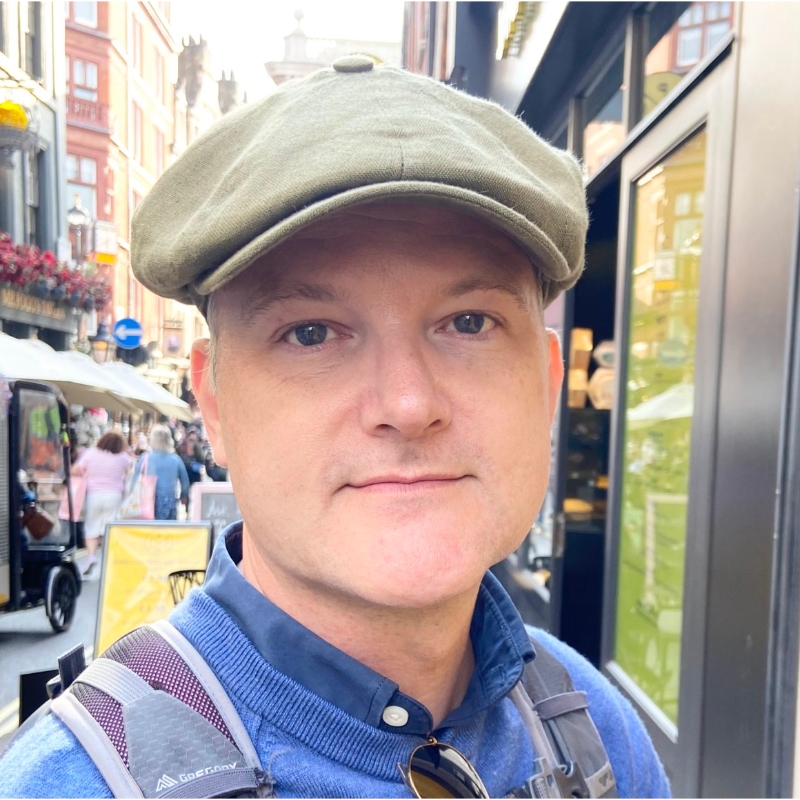
S. Clay Turner

I have built software companies for three decades. I have shipped products. I have exited companies. I have done this work as a creative outlet and a profession. When others asked why I still wrote code as a technical founder, I told them as much. The work has been done from Louisville — with clients and collaborators across the US, Canada, the UK, and the EU.

Starting in late 2024, I stopped writing code.

Let me be clear about that. I am at the keyboard every day. But the act of typing — function by function, line by line — has moved elsewhere. The agents I orchestrate do that work now. I plan. I shape. I review. I steer. They write.

I love it. Today.

I have created, in effect, multiples of myself — agents that hold the parts of the work I used to hold alone. I now produce in a week what used to take me a quarter — though the speed isn't free: the hours I used to spend typing, I now spend reviewing, verifying, and standing behind work I didn't hand-write. I am enthusiastic to profit by this. And I would love to teach others how to step into it themselves.

A note, while we're here. I'm the father of three — two in college at UC Berkeley and Emory, and one finishing high school while concurrently enrolled at the Gatton Academy at Western Kentucky University. I think often about what their generation is walking into. The mentorship on this site is structured for companies — and the Playbook exists for builders working alone — but I am not only for companies. If you're a student, a recent grad, or someone early-career trying to figure out what AI-native work means for you, schedule time with me. I keep room on the calendar for those conversations, no charge. Different terms, same care.
02 The Questions I Cannot Stop Asking

I do worry about the long-term viability of this work.

If I sell AI-native product ownership as a promise without sharing my own reservations, then I'm not telling the truth about the work. So here they are — the questions I cannot stop asking myself, in the open, where anyone considering this way of building can see them.

Q · 01 Am I setting myself up — or worse, the people I mentor — for failure, by not exploring the bigger picture as things continue to change?
Q · 02 Are the conditions that make this way of building profitable today the same conditions that will make it profitable in three years, five years, ten? Or even six months?
Q · 03 Can these challenges be navigated honestly — and still produce a beautiful career?
03 Why Viable Coder Exists

A mentorship I run with full conviction, and an inquiry I conduct with complete transparency.

Somewhere inside the asking, something occurred to me. My own daily work with AI agents is already creating a rich corpus for analysis — every conversation, every plan, every commit, every hour allocated, every dollar of token cost. The same instruments that make me productive also make me measurable. If I tracked those signals seriously over time — across my own work first, and eventually across mentees who choose to participate — I could begin to see what is actually happening to cognition, judgment, time, and economics under AI-native work, instead of guessing at it.

That is the turn. Becoming Viable is what the mentorship can sell honestly today. Remaining Viable is the longer question — whether what works now keeps working, for me and for the people I bring into this way of building, as the conditions underneath it shift. The second half of this site is the half that refuses to wait for the answer to arrive in hindsight. It did not exist until I realized the work itself could be observed.

Two halves, neither complete without the other

The mentorship — Mentorship, Resources — is the half I'm enthusiastic about. The inquiry — Research, Data — is the half I'm concerned by. Both halves are honest. Neither half is complete without the other.

One instrument, two directions.

If I taught only the path forward, I would be a vendor. If I only studied the doubt, I would be useless to anyone trying to build a real business. The work, as I understand it now, is to do both — and to let anyone considering this path see both before they choose.

Whether you hire me or run the Playbook on your own: same kit, two paths — the difference is access to me, not access to the doctrine.

04 Contact

Reach out directly.

No gatekeepers, no intake form.

Sign up for the newsletter.

New Resources, Research, Data readings, and Playbook editions — this list is the only announcement I send.