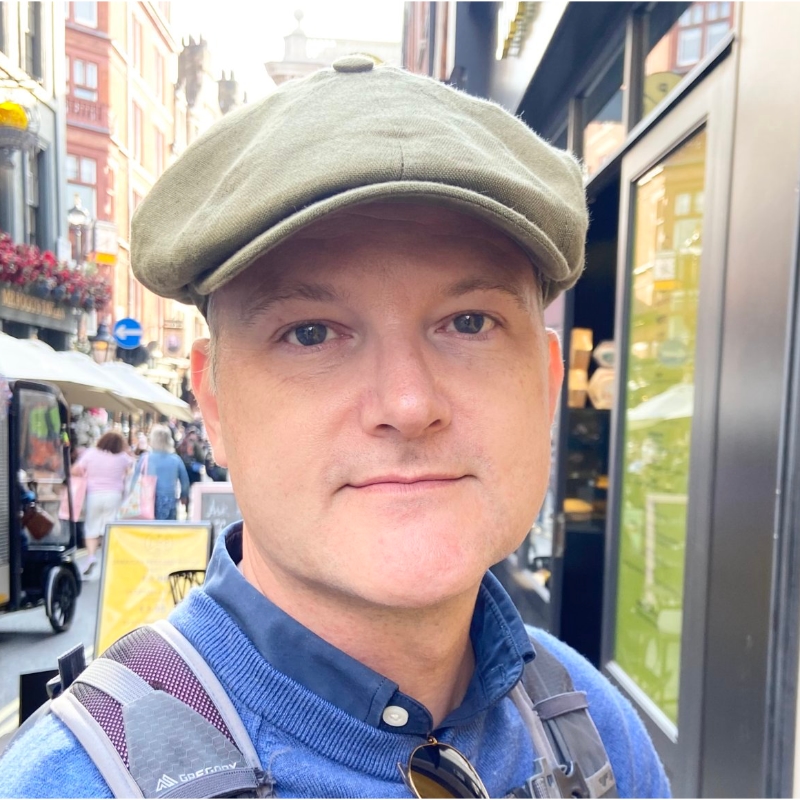
Machines now write the code really well. I develop the humans who decide what it should write for your company, and when it's ready to ship. For a solo founder, that's you. For a company, it's internal talent you've identified or that we seek out together.
It's the configuration everything else gets built against. Open the one that sounds like yours.
Every engagement runs on the Viable Coder kit — the same learning app sold on its own as the Playbook, at four prices set by who holds the licence. We install it in week one, configure it to your situation, and it stays with you when I leave.
Inside your company first — the support lead who keeps proposing better workflows, the ops person who built a tool that actually works. If no one is there yet, we write the profile together and I sit in the interviews. I don't source candidates; I recognize the ones who will hold the judgement.
Where they are, and where the company is. What's realistic. The technical debt and constraints that shape what comes next.
A clear plan for what you'll build, what tools you'll use, what your customers will feel.
Structured, purposeful, tied to your product reality and the person doing the work. Questions don't wait for the calendar; real decisions get real input when they matter.
Introductions, meetups, and workshops with current and past mentees doing the same hard thing.
Engagements conclude when the function is genuinely theirs — and the kit, configured to your situation, stays with you. So does the shop it compiles: your agents and house rules, portable to every repo you work in after I leave.
I conduct an ongoing public inquiry — measuring the long-term viability of building this way across nine dimensions, on the inquiry side and Data. The subject of that inquiry is me, by default. Mentees who want their own work studied the same way can opt in to the cohort, with granular consent. It is never required. The mentorship engagement does not ask you to share data, change how you work, or participate in any measurement. If you want only the mentorship, you get only the mentorship.
From customer-support employee to Director of Product Development & Software. They own their own product destiny — not because they hired a vendor, but because someone already inside was found, and developed into the person who runs their build function.
On teaching
Clay is a natural teacher. He's able to convey highly technical knowledge in a way that's easy to understand for both the technical and non-technical alike. He connects big, transformative ideas to the day-to-day work we're engaging in.
On the work that came out the other side
The biggest thing I've gotten from working with Clay is confidence backed by real capability. A year ago, I wouldn't have even attempted something like this. Now I've built a full system — integrations, AI workflows, data models — the whole thing. And I did it in a way that actually holds up.
Limited to three to five engagements at a time, alongside my active work building AI-native software companies. Engagements run remotely, with periodic in-person time where it makes sense — often in the US, Canada, the UK, and the EU.
Covers weekly sessions, between-session access, and community.
No obligation past the first quarter — continue only if it's working.
When the roster is full, the next conversation has to wait.
Open to equity compensation for early-stage startups where the work warrants it and the cash equation hasn't caught up yet.
The learning app I install with every mentee — curriculum, exercises, working agents, telemetry, dashboards, and the portable shop your configuration compiles for your own repos. Four prices, set by who holds the licence: $3,900 for a company (five seats and one working session with me), $995 for an individual, $495 for a qualifying startup, $95 for a student.
The learning appThe corporate engagement is paid because the expertise behind it was earned on what was, for several years, a fairly lonely hill — well before companies had the appetite to invest in it. That learning carries real cost, and real value. Students, recent grads, and people my own kids' ages are a different conversation: the kit has a student price under a hundred dollars, and the conversation itself is not a paid one. Schedule time with me directly — I keep room on the calendar for it. More on that on the About page.
Thirty years of building software companies, with multiple exits — the pattern recognition that only comes from doing it repeatedly. Currently technical co-founder of two AI-native startups, Soaring Titan and Maximum Automotive Intelligence. This is not theory; it's what I do every week. The mentorship I offer is the version of the work I'd want from someone who'd actually done the thing — not a deck, not a framework, not a certification. Real builds, real decisions, real ownership transfer.
One distinction, so you know which door you're at. If you want a development partner — a team that builds your software, with AI, and hands you the result — that's Soaring Titan. If you want your own people to build it, and to hold the decisions about what gets built and whether it's ready, that's this. The line between the two is who builds it. What I keep finding, as of October 2026: every company I talk to is going to need this function, whether or not it has a name for it yet.
Same kit, two paths. The difference is access to me, not access to the doctrine. Students and early-career builders: the conversation is free.
New Resources, Research, Data readings, and kit editions. This list is the only announcement I send.